
FindU's 2025 Wrapped
A year of listening, learning, and rebuilding the college search process.


From a class project to a real venture
Not going to lie, it’s been quite a year. FindU started as a class project our freshman year and, over the past year, grew into a venture we’re genuinely excited to carry into 2026 and beyond.
Along the way, what began as an idea quickly turned into the challenge of building something that actually helps students navigate the college search in a meaningful way. Moving from early assumptions to real use forced us to rethink how we build, how we work as a team, and what it means to solve a problem responsibly.
Building before we felt ready.
This year started as scrappy as it gets. We were building an app without really knowing how to build an app. Up until then, FindU lived mostly as a Figma prototype. While the designs were strong, we had no real way to test whether the product actually worked or if anyone would use it.
So we made a decision that shaped the rest of the year. Instead of waiting until everything felt “ready,” we spent winter break building an MVP and putting it in front of real people. Most of that break was spent hacking together something usable, knowing it wouldn’t be perfect.
And it wasn’t.
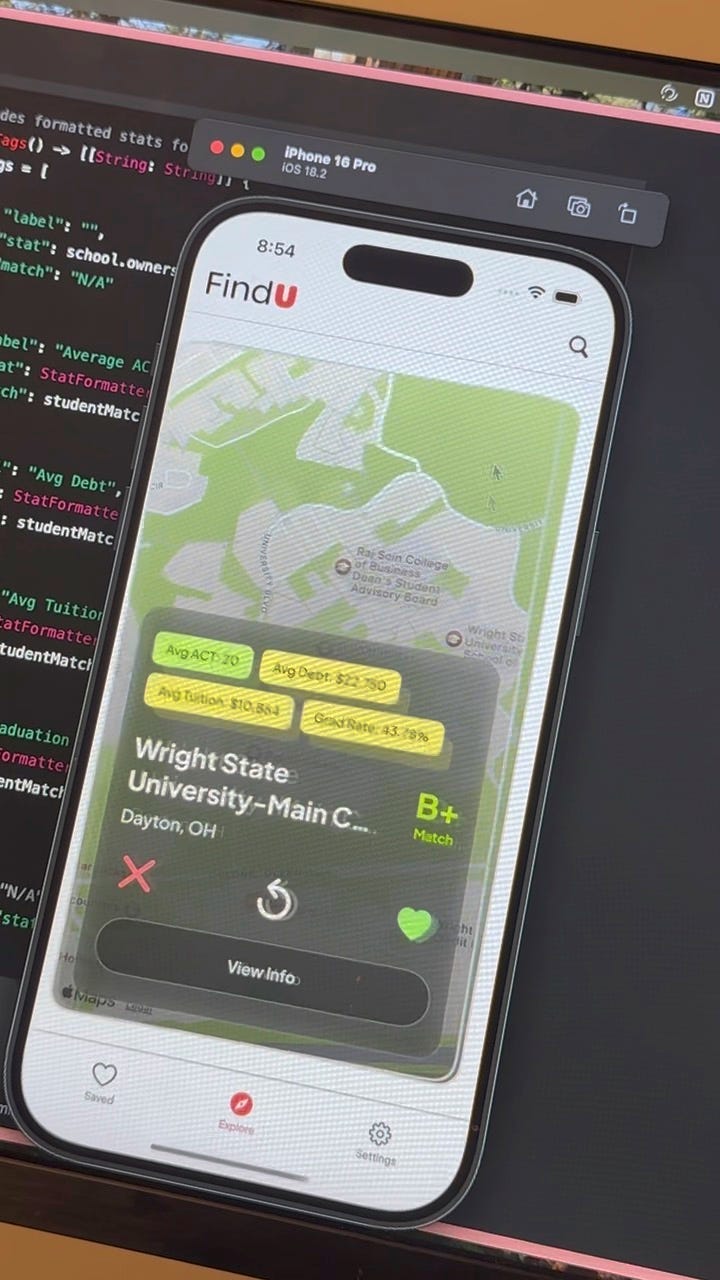
Looking back now, the version we shipped is almost cringey. There were glaring mistakes, rough edges, and things we’d never ship today. But it worked in the way that mattered most — it gave us feedback. Once winter break ended and we launched, we stopped guessing and started learning.
Putting ourselves out there
Once we felt like we had something usable, we decided to just put it out there. We shared FindU on LinkedIn, Product Hunt, and with people in our close circles, and ended up getting around 65 downloads.
Not long after that, we pitched FindU for a spot in the Raikes School Startup Studio. We ended up getting in, along with early investment from local supporters. At that point, it stopped feeling like just a side project and started feeling like something we actually had a responsibility to follow through on.
Everything was moving quickly, and we were excited to spend the summer focused on improving the product and figuring out what FindU could really become.
A bit of a reality check…
1. Marketing
We spent most of the summer improving the product. We added scholarships, refined onboarding, and worked on the matching algorithm. By the time we entered Startup Studio, we felt ready to start marketing FindU and bringing in users.
What we quickly learned was that getting attention isn’t as simple as it looks. Even when a few videos picked up views, that interest didn’t consistently convert into real usage. Building a better product was one challenge; getting it in front of the right people in a meaningful way was another.
Instead of chasing views or trying to replicate what works for other apps, we started focusing on whether our messaging was actually reaching the right students and setting the right expectations.
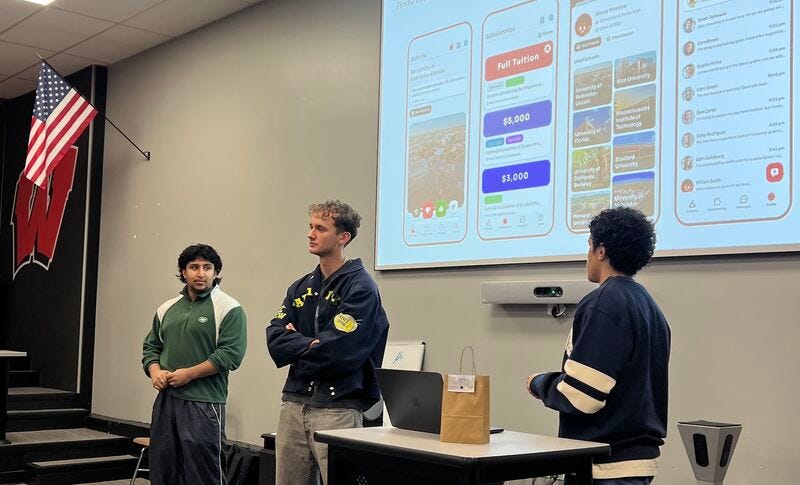
We learned that attention alone isn’t enough. Without a strong feedback loop, it was hard to understand what students actually needed from FindU. That realization pushed us to shift some of our focus toward high school pilots, where we can work more closely with students and counselors and build with real, ongoing feedback.
2. Building and leading a team
Before the 2025–2026 school year, FindU was mostly just me and Wilson. That made things simple. We both had full context, decisions were fast, and nothing got lost in translation.
As we started bringing others on, that simplicity disappeared. We quickly realized how much context lived in our heads and how hard it was to transfer that understanding to new people. Things we assumed were obvious weren’t, and decisions that used to feel easy suddenly required more explanation and structure.
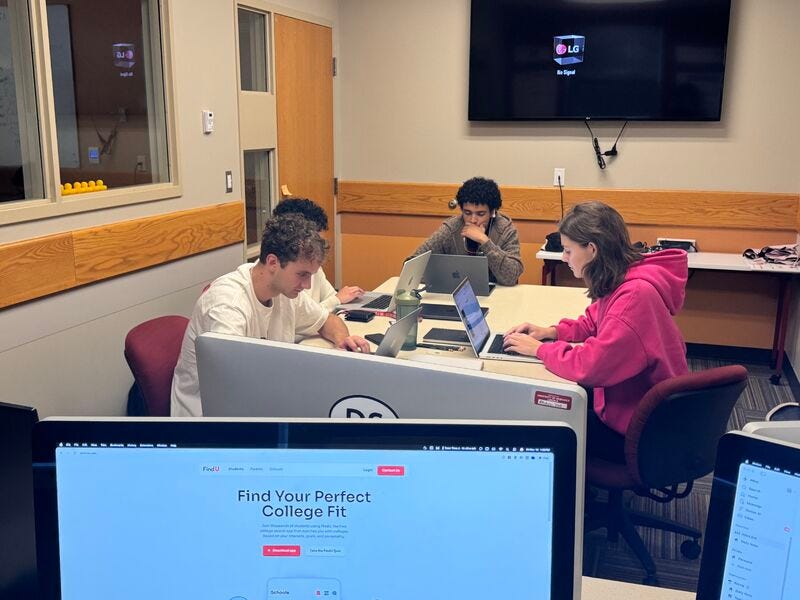
That shift forced us to think differently about leadership. Building FindU stopped being just about doing the work ourselves and started being about setting direction, communicating clearly, and creating systems that allowed others to contribute meaningfully.
3. Building the right thing
We also learned that even though our development speed was fast, speed alone wasn’t enough. Early on, it was tempting to keep building everything we thought FindU needed. But adding more features didn’t always make the product clearer or easier to use.
That forced us to slow down and be more deliberate about what we built and why. We started prioritizing decisions that reduced confusion for students instead of just increasing functionality, and that shift made our product direction much clearer.
What we’re taking into 2026
Going into 2026, we’re carrying these lessons with us. Our focus is on getting FindU into the hands of more students while continuing to improve the product until it genuinely sticks. That means prioritizing real usage and long-term value over short-term spikes in attention.
To do that, we’ll be more intentional about how we market FindU and more disciplined about how we build. We’re investing in stronger systems across both development and the business so the product can scale thoughtfully without losing clarity or focus.
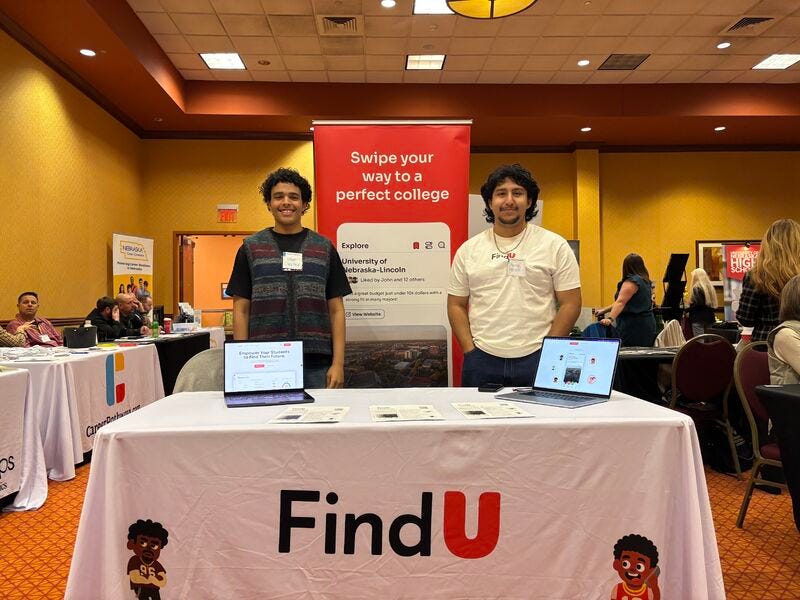
Our obligatory win section
Before we wrap this up, we’re giving ourselves a small moment to call out some of the wins and contributions from the team.
Team shoutouts
Tatum Terwilliger — led our high school outreach and was the driving force behind securing and launching our first pilot with Malcolm.
Lance Buscher — led our ambassador program and facilitated the majority of the user feedback that shaped our early product decisions.
Zakaria Rab — improved our existing matching algorithm and built an LLM-based matching approach that pushed our personalization and recommendations.
Viraj Karthik — built an interactive map that significantly improved how students explored and selected where in the country they wanted to go.
Micah Tidball — rebuilt our company website and improved how scholarships are displayed and explored within the app.
Kenny Morales — led design across FindU, shaping the product’s user experience and visual direction while translating user feedback into clearer, more intuitive flows.
Wilson Overfield — led development and technical architecture across FindU, focusing on reliability, scalability, and iteration speed.
This team is a big part of why we’re excited about what’s ahead in 2026.
 | A guest post by
|